


Consulting:
Talent Management

Our Research-Based Principles
- In every job, some people perform more effectively than others.
- Superior performers do their jobs differently and possess different characteristics, or "competencies", than average performers do.
- These differences are valuable: on average, 40% of salary.
- The best way to identify the characteristics that predict superior performance is to study your top performers.
Our Expertise
Workitect consultants help organizations develop job competency models and competency-based human resource applications for:
- Assessment and Selection
- Performance Management
- Succession Planning
- Training and Development
- Talent Management
Our Clients
Business, government, and non-profit organizations in most industries. Seventy percent are small to medium sized organizations
Review list»
Our Consultants
We are a small "boutique" firm with a highly specialized staff, each consultant having at least twenty-five years of experience in competency-based human resources, talent management, organization development, and leadership development. Team of contractors
Read consultant bios»
Our Job Competence Assessment Methodology
Our approach is based on the original job competence assessment methodology developed in the 1970's by Dr. David McClelland, a pioneer in competency research and testing, and consultants at McBer and Company.
Learn more about competencies, job competency models, and our methodology»
The Benefits for Organizations
- Results are tied to performance... not just opinion
- Competencies are job-related... not theoretical
- Characteristics are behaviorally specific... so you can see and measure them
- It identifies job requirements and success... what success "looks like in action"
The Benefits for Individuals
As an Individual, you can use a job competency model to guide your own career development. Coupled with an accurate assessment of your own competencies, you will be able to identify competencies needing development and identify other jobs or careers that make better use of the competencies you possess.
Read more»
Our Experience


Examples of Consulting Projects
- Customizing a competency dictionary/library and data gathering and data analysis tools
- Conceptualizing and defining a set of technical competencies
- Developing three-level competency models for leadership and individual contributor positions
- Revising an existing competency model based a non-Workitect approach into a simpler model identifying expected behaviors for each management level, and positive and negative indicators of each competency
- Training internal HR staff to introduce competency models into an organization and develop an approach to create a first model.
- Identifying and developing competency models that meet the unique needs and demands of a global organization.
- Creating a framework for baseline assessments of competencies of a population
- Identifying leadership competencies used in assessing middle and senior leaders, then developing and administering a 360° multi-rater feedback instrument. Providing feedback and executive coaching for leaders who have been assessed
- Developing a global competency framework (dictionary) used to create competency models for all jobs in a global organization. Customizing Workitect's Resource Guide to an organization's competencies.


Feedback from Clients


"Structured process, with tools that give us flexibility"
"Revamped our entire performance development process."
"Taught us a repeatable process for building customized models"
"Refreshingly different from the usual consultant experience"


Working with the Workitect consultants was refreshingly different from the usual consultant experience. Not only did they demonstrate significant expertise in building competency models for our organization, they were dedicated to providing our internal staff with the skills needed to follow the process and build additional models ourselves. Their goal was to teach and guide us to be self sustaining, and they did this by providing training, allowing us to shadow them during the building process, and being available to address questions and concerns throughout the process. Overall, our relationship with Workitect has been invaluable, and we are quick to recommend them to anyone who is interested in creating customized competency models for their organization." "
Performance Consultant
Blue Cross Blue Shield of Alabama


Manager, International Human Resources
Mary Kay Inc.


Corporate Trainer
SCC SoftComputer


Structured, but flexible
"My organization uses the Workitect methodology for writing competency models because it's structured enough to give us direction, but the many tools provided also allow for flexibility. You're not forced into using a cookie-cutter approach when you're faced with time constraints or the complexities that often arise when you're trying to pinpoint success factors for highly technical or ever-evolving jobs. The models we designed using the Workitect approach helped our company revamp our entire performance development process."
Mary Kay LaBrie
SCC SoftComputer


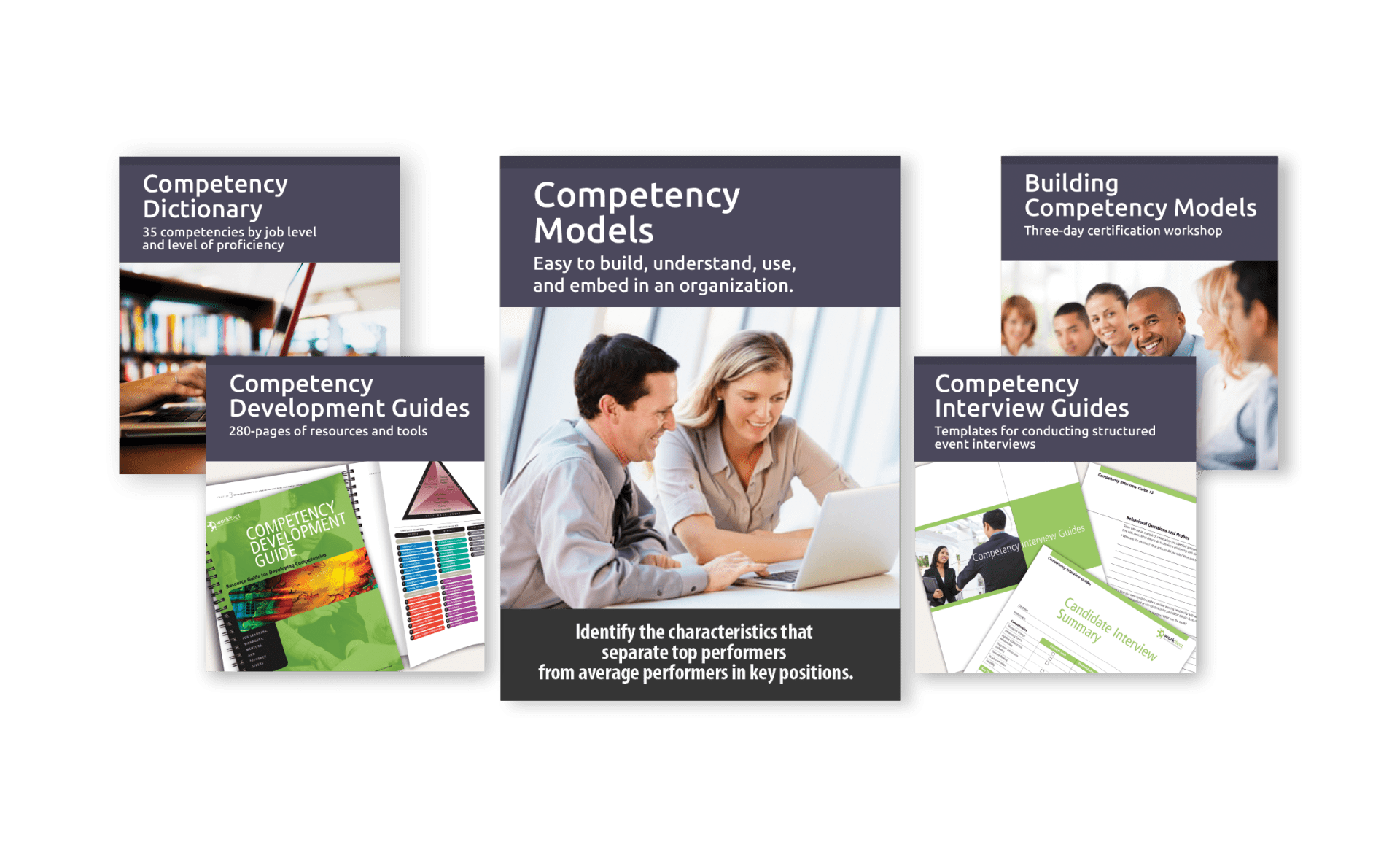
Competency Dictionary
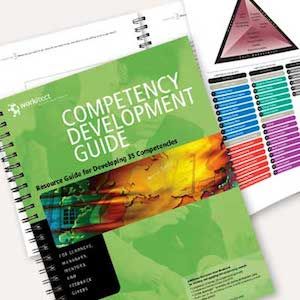
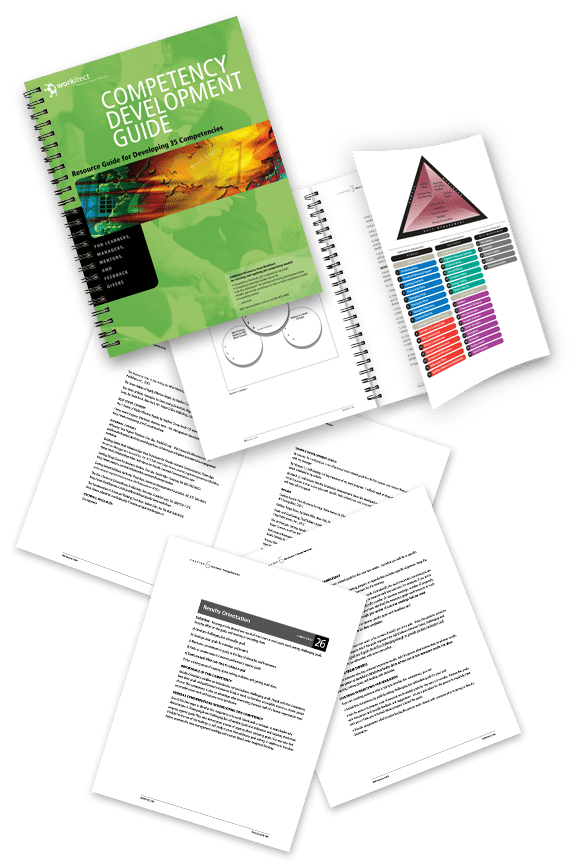
Workitect's Competency Dictionary or library consists of 34 competencies organized into three clusters, competencies dealing with People, Business, and Self Management (Competency Chart). Intellectual property licenses are available that enable you to use the content within your organization.
Competency Models
Examples:
- Account Representative
- Call Center Manager
- Executives
- Marketing Representative
- Project Manager
- Human Resources
Comparison of
Job Analysis Techniques
- "Armchair Theory"
- Job-Task Function Analysis
- Job Competence Assessment
Develop Your Own
Competency Models
Schedule an on-site program or attend a public session of:
BUILDING COMPETENCY MODELS, a three-day workshop that prepares HR professionals to develop their own competency models without external assistance. As a result of attending this program, participants will be able to:
- Understand alternative methods for building single competency models:
- Understand approaches for building competency models for multiple jobs in an organization
- Plan and develop a focus group for competency modeling
- Conduct Key Event Interviews for competency modeling
- Use the probing strategy of Key Event Interviewing
- Analyze interview transcripts and write job models
Also Learn About:
Competencies & Competitiveness[459kb PDF] and the ROI of Competency Technology [158kb PDF], and explore the many other resources, tools, and programs available on our website.


Competency-Based Applications